


Women, leadership and the weight of being human at work
What does it take to remain human in difficult workplaces? This was the question raised by the fraymedia Foundation’s Rise and Shine Women in Media Breakfast Series Keynote speaker Khadija Patel who shared a powerful and deeply personal session on Thursday May 7, 2026.
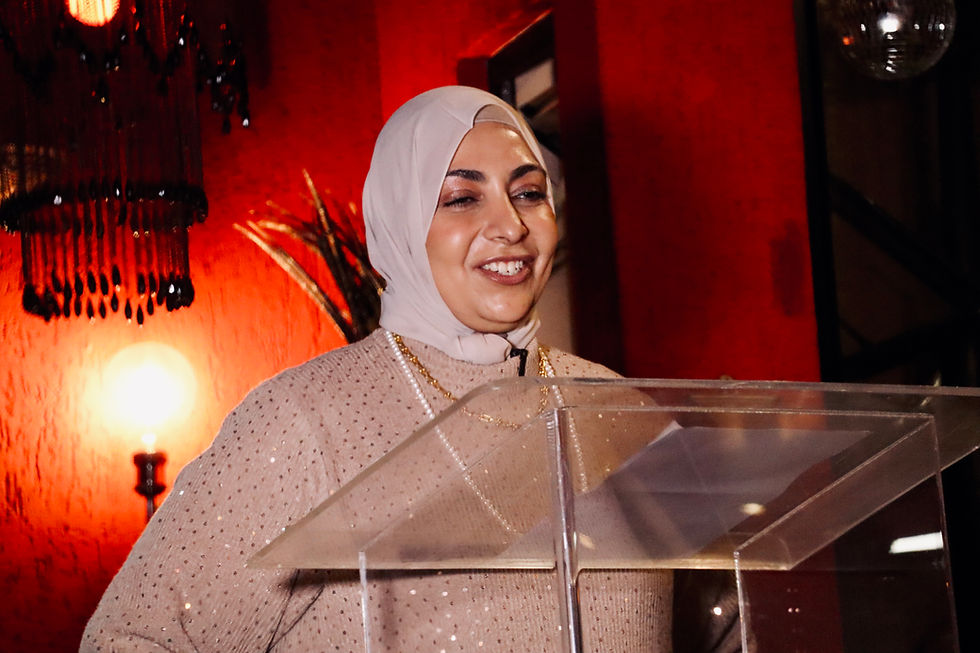
Held at the opening of The Good Business Journal Summit, in Houghton, Johannesburg, the Breakfast brought together women leaders, media professionals, entrepreneurs, civil society leaders and allies for a conversation that moved well beyond the traditional 'women in leadership' script. Patel reflected on the emotional cost of leadership, the persistent gendered realities of newsroom culture, and the growing pressures facing independent media globally.
Drawing on experiences from her time leading the Mail & Guardian and her current role at the International Fund for Public Interest Media, Patel spoke candidly about burnout, vulnerability, online abuse, institutional responsibility and the loneliness many women experience in senior leadership roles.
“There’s usually a ready speech for such events,” she said. “We talk about the data, the funding gaps, the state of the industry. But I wanted instead to take a moment, considering this is a gathering of women especially, to reflect on the difficulty of being a human being at work.”
Patel spoke candidly about the reality many women leaders experience: entering spaces believing hard work and competence will be enough, only to encounter prejudice and exclusion that cannot be controlled. She described leadership as both isolating and emotionally demanding, particularly when navigating institutions under pressure.

One of the most powerful moments of the morning came as Patel recounted an experience from more than a decade ago while attending a media conference in Warsaw as editor-in-chief of the Mail & Guardian. At the time, she was the only woman on the executive team and there were no women on the board. During a strategy session with an internationally recognised media executive, she described being repeatedly ignored while advice for “the editor” was directed exclusively to the men around the table, despite her sitting there as editor herself.
“I have never felt more humiliated in my life,” she said.
Patel described leaving the room in tears, overwhelmed by the responsibility of protecting both the institution and the people who worked within it. Sitting alone in her hotel room in a foreign city where she already felt unwelcome, she questioned whether she could continue in the role at all.
“I felt completely terrified,” she told the audience. “In that moment, you are just a human being trying to make decisions that feel far greater than any one individual could make.”

In addition to the personal growth lessons, Patel reflected on the growing precarity facing journalism globally. Drawing on her current role at the International Fund for Public Interest Media, she argued that journalism’s survival cannot rely on individual resilience alone.
“I got tired of seeing the best journalists I know burn out because they were fighting a war on two fronts,” she said. “One against the powerful people they were investigating, and another against a bank account that was perpetually empty.”
Her remarks connected the future of journalism directly to democratic stability, urging both business leaders and media practitioners to view support for independent media as essential civic infrastructure rather than simply another commercial sector.
“If a shoe factory fails, the world has fewer shoes,” she said. “If a newsroom fails, the world has less understanding of who it is.”
Throughout the remarks, Patel returned to the importance of humanity, empathy and emotional intelligence in leadership. She challenged the idea that sensitivity is weakness, arguing instead that it is often what makes women effective leaders.
“I know the exhaustion of being told to toughen up,” she said, “when in fact it is our sensitivity, our feeling nature, our ability to see the human being behind the numbers that makes who we are in leadership essential.”
The conversation continued after the formal address with many sharing that Patel’s story resonated strongly because it reflected a reality many women know intimately, that the burden of leadership often extends far beyond strategy or performance targets. It includes emotional labour, invisible care work, mentoring younger staff, navigating hostility in digital spaces, and carrying institutional responsibility while simultaneously defending one’s own legitimacy.
Patel ended her address by reflecting on returning, years later to a similar international conference, this time stronger not because she had avoided struggle, but because she had strived through it.
“I had cried. I had struggled through. I had faced that difficulty,” she said.
“And somehow I returned with a different title, yet still more respected and celebrated. And that, I hope, is the experience for all of us.”
Key Reflections from Khadija Patel's Keynote Remarks
Leadership can be profoundly lonely
Patel spoke honestly about the emotional isolation of senior leadership, especially when women are expected to make high-stakes decisions while simultaneously proving their legitimacy in male-dominated spaces.
Humanity is not a weakness in leadership
Rather than suppressing emotion, Patel argued that empathy, sensitivity and the ability to see “the human being behind the numbers” are essential leadership qualities.
Journalism’s crisis is both financial and democratic
Patel stressed that the collapse of newsrooms affects far more than the media sector itself. Independent journalism, she argued, acts as a safeguard for democracy, accountability and social cohesion.
Women carry invisible labour into the workplace
From managing households to mentoring younger staff and navigating online abuse, Patel highlighted the layers of emotional and practical labour many women perform before they even begin their formal workday.
Resilience is built through struggle, not perfection
Reflecting on a painful experience at an international media conference years earlier, Patel explained that strength came not from avoiding vulnerability, but from surviving difficult moments and continuing anyway.
Independent media needs active public support
Patel urged attendees to see subscriptions, sponsorships and support for journalism not simply as transactions, but as investments in democratic stability and public understanding.
Women leaders are redefining workplace culture
The discussion that followed reinforced a central theme of the morning: women often lead collaboratively, empathetically and with a deep awareness of how decisions affect people, not only institutions.
GALLERY: Rise & Shine Women in Media Breakfast Series with Khadija Patel
Photos by Rebaona Modutwane, Multimedia Producer, frayintermedia
About the Keynote Speaker, Khadija Patel

Khadija pushes words on street corners.
She is the former editor-in-chief of the Mail & Guardian in South Africa, a co-founder of the youth-driven, award-winning digital news startup, The Daily Vox, and a vice chairperson of the Vienna-based International Press Institute (IPI).
As a journalist she has produced work for Sky News, Al Jazeera, The Guardian, Quartz, City Press and the Daily Maverick, among others. She is also a research associate at WISER (Wits Institute for Social and Economic Research at the University of Witwatersrand). She is passionate about the protection and enhancement of global media as a public good.
See below previously held fraymedia Foundation Rise & Shine Women in Media Breakfast Series:
27 February 2026 – Rise & Shine Women in Media Breakfast Series with Bongekile Macupe
30 January 2026 - Rise & Shine Women in Media Breakfast Series with Ferial Haffajee
24 October 2025 - Rise & Shine Women in Media Breakfast Series with Gabriella Razzano
26 September 2025 - Rise & Shine Women in Media Breakfast Series with Sarah Owusu
22 August 2025 - Rise & Shine Women in Media Breakfast Series with Brenda Kali
25 July 2025 - Rise & Shine Women in Media Breakfast Series with Taahir Hoorzook
30 May 2025 - Rise & Shine Women in Media Breakfast Series with Dr Abba Yacoob Omar
7 June 2024 - Rise & Shine Women in Media Breakfast Series with Paula Fray
8 March 2024 - Rise & Shine Women in Media Breakfast Series with Dr Felleng Yende
24 November 2023 - Rise & Shine Women in Media Breakfast Series with Lavina Ramkissoon
15 September 2023 - Rise & Shine Women in Media Breakfast Series with Mark Levy and Jade Kirkel
14 July 2023 – Rise & Shine Women in Media Breakfast Series with Tebogo Skwambane
9 June 2023 – Rise & Shine Women in Media Breakfast Series with Bongiwe Mlangeni
12 May 2023 – Rise & Shine Women in Media Breakfast Series with Inga Gubeka


I really appreciated the thoughtful perspective on the realities of women in leadership and the human side of leading teams. Authentic leadership is built through resilience, empathy, and continuous personal growth. Professionals looking to strengthen these capabilities may also benefit from a highly regarded women's leadership course & workshop for managers in Vienna, Austria to develop stronger leadership, communication, and decision-making skills. Thank you for sharing such an inspiring article.
Conversations around authentic leadership increasingly emphasize the importance of inclusion, well-being, and supportive organizational cultures that allow leaders to thrive without sacrificing individuality. These leadership development and workplace inclusion concepts are also explored in the women's leadership seminar & course for executives in Vienna, Austria, where professionals examine executive presence, inclusive leadership strategies, and the evolving role of women in modern organizations.