


World AIDS Day Marked by the Launch of the Phangisile Mtshali Award to celebrate Excellence in Health Communications
The global commemoration of World AIDS Day formed the backdrop to the announcement the first recipient of the Phangisile Mtshali Award for Transformative PR, an honour recognising emerging women leaders whose work strengthens public health and social impact communication.
Hosted by the fraymedia Foundation, the award was created in memory of the late communications professional Phangisile Mtshali, whose career bridged journalism, HIV advocacy, and community-centred public relations.
The nightlight of the session was the announcement of Lilita Gcwabe as the first winner of the Phangisile Mtshali Grant Award. Gcwabe’s work was recognised for exemplifying clarity, integrity, and a commitment to community-centred health communication—all attributes associated with Mtshali’s legacy.

Opening the webinar, fraymedia Foundation CEO Paula Fray stressed the significance of launching the award on World AIDS Day:
“World AIDS Day is also a perfect reminder of how far effective communications have brought us—and how much further we still need to go. And it's in this spirit, really, that, the Phangisile Mtshali Award for Transformative Public Relations was born.”
Fray highlighted Mtshali’s role as a communicator whose work spanned sectors deeply shaped by the HIV epidemic.
“First, she was an award-winning journalist… then a public relations expert who focused on health issues. Whether she worked in HIV, TB or other non-communicable diseases, Phangi always brought a sense of purpose.”
She added that the intention behind the award was long-term sectoral strengthening and thank the initial funders - Pearl Majola, Charmeela Bhagowat and Bongiwe Mlangeni - for their support.
Delivering a tribute woven with personal recollection, Professor Nombulelo Magula, Head of Department of Internal Medicine, Nelson R Mandela School of Medicine, University of KwaZulu-Natal, located the award within the broader story of South Africa’s response to HIV and the essential role communications played through its darkest periods.
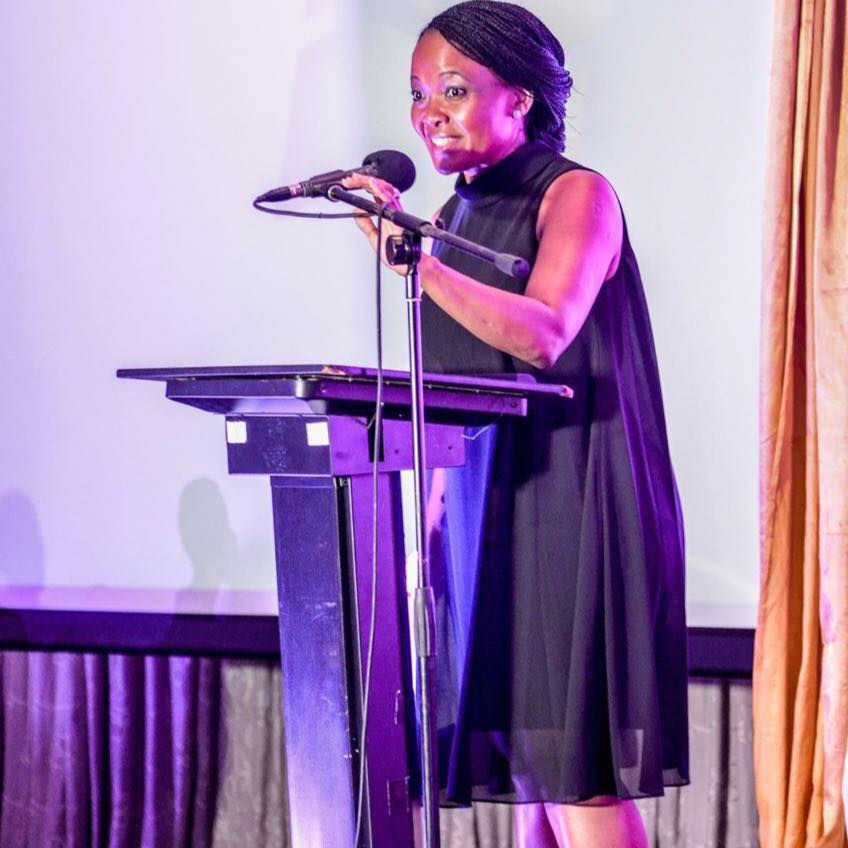
She reminded participants that the first AIDS conference in South Africa, the 13th International AIDS Conference in 2000, marked an epochal shift. Under the theme “Break the Silence,” it confronted a country still reeling from the public violence and stigma that surrounded HIV—reflected so painfully in the 1998 stabbing of a young woman who had disclosed her status. At the same time, South Africa was navigating a post-apartheid reframing of the health system: a new democracy, but a health sector increasingly divided by affordability.
Professor Magula spoke powerfully about those early 2000s, when young people were dying in heartbreaking numbers. In 2003 and 2004, HIV was still not listed among the leading causes of death—even as families were burying loved ones every weekend. Officially, it ranked only 21st on the list of causes of death, masking the true scale of the crisis.
But the keynote also offered hope. Over the years, treatment has improved dramatically—from multiple tablets to one tablet a day, with faster and more efficient testing and treatment pathways. And by 2014, the global community aligned behind shared goals for the first time. Through the Paris Agreement, the world committed to the 90–90–90 targets, signalling a united vision to end HIV by 2030.
“This shows how much we achieve when we work together as institutions, as communities, as communicators, and those in the health and academic space in the various sectors of government.
The one intervention that I would promote as we move forward, is this person-centered approach, where we no longer look at diseases, but we look at individuals”
she said, emphasising that launching the award on World AIDS Day underscored Mtshali’s belief that health communication is a pillar of public health itself.
The finalists for the Phangisile Mtshali Award were commended for work that blends strategic communication with advocacy in areas ranging from health to social justice.
Fraymedia Foundation COO, Bongiwe Tutu acknowledged the finalists ’impact. She stressed that the judges recognised the importance of rooted, community-based work:
“Often incorporated voices from affected communities… And what struck us was how many of you are already working inside communities dealing with health, with gender-based violence, with social issues that need strong, ethical communication.”
There four finalists were Nontobeko Mtshali – Managing Director & Founder, Magalela Media Services (Gauteng); Nokuthula Khwela – Communications Consultant & Journalist, Nduli Media (Gauteng); Chantel Erfort Manuel – Media Consultant (Western Cape); and, Lilita Gcwabe – Media Producer & Multimedia Journalist (Gauteng).
Judges Kanya Ndaki and Dr Lerato Mtshali praised the entrants for advancing a model of public relations that centres public interest and health equity.
Ms Ndaki said;
“So to the finalists, thank you. You have set such a strong example of what transformational PR looks like when purpose and craft come together.”
She added that their collective strengths shaped the judges ’final decision.
“So in your combined strengths, we saw a blueprint for the future of this award.”
Closing the ceremony, Fray connected the award to the enduring spirit of World AIDS Day.
“Again, thank you to our four remarkable finalists. Your communication really reminds us why this award actually matters. Because public health needs strong communicators—whether it's HIV, NCDs, maternal health, or any crisis we face. We look forward to growing this award, to expanding… And so, to everyone, to all of you, thank you very, very much.”


Comments